AI Coding Assistants vs Human Developers: What’s the Future of Software Development?
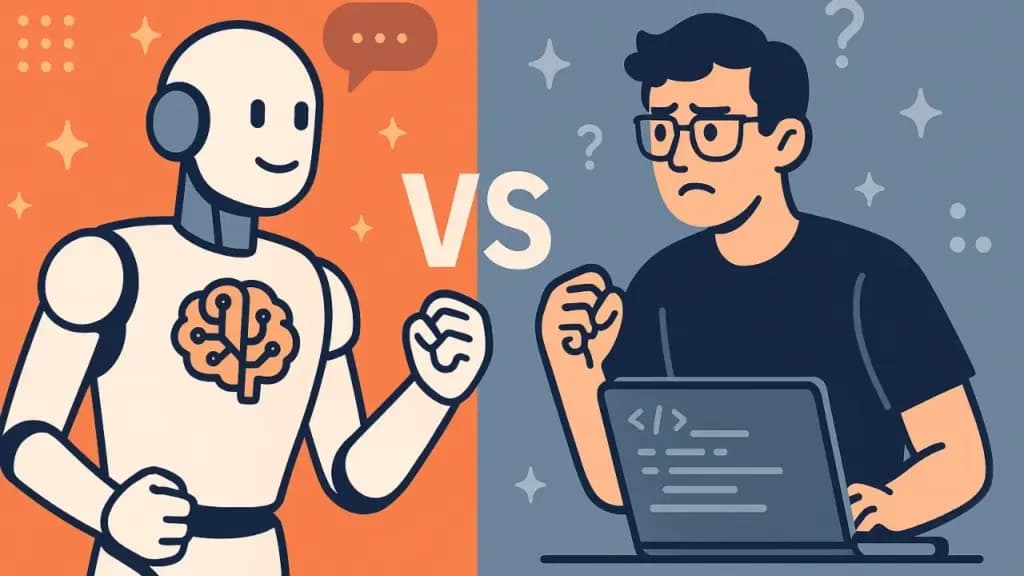
AI Coding Assistants vs Human Developers: What’s the Future of Software Development?
Introduction to AI Coding Assistants and Human Developers
The landscape of software development is changing rapidly, driven by technological advancements and the emergence of AI coding assistants. As these intelligent tools gain prominence, questions arise about the role of human developers and how these two forces will coexist in the future.
Overview of AI Coding Assistants
AI coding assistants, like GitHub Copilot, Tabnine, and OpenAI's Codex, utilize advanced algorithms to assist developers in writing code more efficiently. These tools can suggest code snippets, automate debugging processes, and even generate entire functions based on a developer's prompts. Designed to enhance productivity, AI coding assistants represent a significant shift in how software is developed, enabling programmers to focus more on higher-level design and creative problem-solving.
Role of Human Developers in Software Creation
While AI coding assistants provide invaluable support, human developers remain at the core of software creation. They not only write code but also interpret complex requirements and ensure that the software aligns with user needs and organizational goals. Human intuition, creativity, and emotional intelligence are irreplaceable qualities that guide developers as they craft innovative solutions.
Current State of AI in Software Development
The role of AI in software development has grown substantially over the past few years, and 2023 presents a unique picture of this integration.
Popular AI Coding Assistants in 2023
Several AI coding assistants have emerged on the market, each with unique functionalities designed to cater to developers across different programming languages and environments. GitHub Copilot, for instance, has become a favorite among developers for its deep integration with Visual Studio Code and its ability to suggest relevant code snippets in real time. Similarly, tools like CodeWhisperer by AWS and Kite are gaining traction, emphasizing AI's critical role in modern programming environments.
Case Studies of Successful AI Integration
The benefits of AI coding assistants are already observable through various case studies. A software development company that adopted GitHub Copilot reported a 30% increase in productivity, allowing developers to deliver projects faster and with fewer errors. Similarly, research at a leading tech university revealed that students utilizing AI tools for coding assignments experienced improved learning outcomes and increased engagement, highlighting the potential of AI in education and skill acquisition as well.
Advantages of AI Coding Assistants
Integrating AI coding assistants into software development processes offers several powerful advantages that can reshape the industry's future.
Increased Efficiency and Productivity
AI coding assistants significantly enhance the efficiency of development teams by automating repetitive tasks such as code formatting, syntax checks, and even debugging. This automation allows for faster project completion and gives developers more time to focus on complex problem-solving, thereby enhancing overall productivity.
Cost Reduction in Development Processes
By improving efficiency and reducing the time required to complete projects, AI coding assistants can lead to significant cost savings. Companies can allocate resources more effectively and potentially minimize the need for large development teams. This isn’t just advantageous for large organizations; even startups can benefit from these tools by reducing overhead costs while maintaining high-quality output.
Limitations of AI Coding Assistants
Despite their advantages, AI coding assistants are not without limitations that must be considered as they become integral to software development.
Challenges in Understanding Complex Requirements
One of the primary challenges with AI coding assistants is their limited ability to understand complex and nuanced project requirements. While these tools can suggest code based on existing patterns, they may struggle with unique scenarios or projects that require creative thinking and new designs. This limitation emphasizes the need for human intervention to ensure that the final product meets all stakeholder requirements.
Ethical Considerations and Bias in AI
AI coding assistants can also inherit biases from the data used to train them. Inadequate representation in their training datasets can lead to biased suggestions, resulting in ethical dilemmas. Developers need to be aware of these biases and take proper measures to ensure the outcomes are fair and equitable, particularly when developing software intended for diverse user bases.
The Indispensable Role of Human Developers
Despite the growing capabilities of AI coding assistants, the role of human developers remains essential in the software development process.
Creative Problem Solving and Innovation
Human intuition and creativity are paramount when it comes to addressing unique challenges in software development. Developers excel at looking beyond code, considering user experience, design, and innovative solutions to problems. This creativity is something AI cannot replicate, as it relies solely on learned patterns rather than innovative thinking.
Emotional Intelligence in Team Collaboration
Moreover, the emotional intelligence that human developers bring to the table cannot be understated. Collaborative teamwork, effective communication, and conflict resolution are crucial components of successful project delivery. Human developers foster relationships within teams and with clients, ensuring a greater alignment of goals and expectations.
Future Predictions: AI and Human Collaboration
Looking ahead, the relationship between AI coding assistants and human developers is likely to evolve into a collaborative partnership rather than a competitive one.
Emerging Trends in Hybrid Development Teams
The future of software development will likely see the rise of hybrid teams that blend AI tools with human expertise. In these environments, developers will work alongside AI assistants, leveraging their capabilities for enhanced accuracy and productivity. This collaboration will foster a more efficient development process where the strengths of both parties are maximized.
The Evolving Skill Sets for Developers
As AI coding assistants integrate deeper into development workflows, the skills required for human developers will evolve. Developers will need to embrace a mindset of adaptability, mastering both technical abilities and soft skills. Familiarity with AI technologies will become essential, as will the ability to critically assess AI-generated code and make informed decisions based on their unique insights and experiences.
Conclusion: What Lies Ahead in Software Development?
The intersection of AI coding assistants and human developers heralds a new era in software development, characterized by collaboration and innovation.
Balancing AI and Human Contributions
To navigate this evolution, it is crucial for organizations to strike a balance between leveraging AI's strengths and preserving the indispensable attributes of human developers. By doing so, teams can ensure that they are not only more productive but also capable of delivering solutions that are creative, ethical, and aligned with user needs.
Preparing for the Future of Work in Tech
In conclusion, as we prepare for the future of work in tech, embracing AI coding assistants will be essential for staying competitive. However, recognizing the unique contributions of human developers will ensure that the field of software development thrives, continuing to evolve in more thoughtful and innovative directions. Collaboratively, AI and human developers can pave the way for a more effective and imaginative future in technology.
Frequently Asked Questions
Related Articles
 AI & Future Tech
 Explained: Agentic AI and How It Will Automate Tech Workflows
Discover how Agentic AI is reshaping tech workflows by enhancing automation, functionality, and efficiency in businesses. Explore its impact and future potential.
Comments (0)
No comments yet. Be the first!